Smile Dream: A Modern Script Handwritten Font for Editorial Design
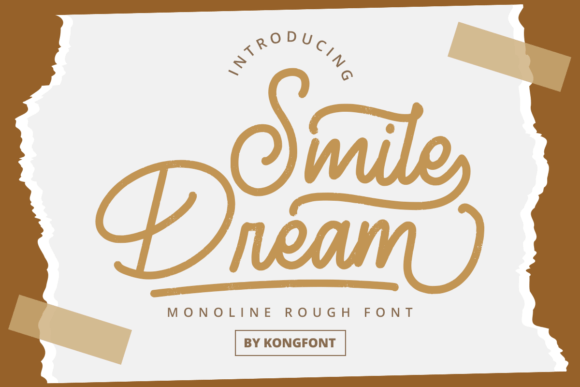
As a publisher and editorial designer who crafts blogs, digital magazines, and branded printables, I rely on fonts that do more than look beautiful—they shape tone, guide attention, and reinforce identity. Smile Dream is a modern, graceful and elegant monoline script font that delivers precisely that: a vibrant stroke with quiet confidence, built for clarity and charm across editorial contexts. Unlike ornate scripts that sacrifice legibility, Smile Dream balances fluidity and structure—making it ideal for Script Handwritten applications where personality meets professionalism. Whether you’re designing a lifestyle newsletter or packaging a premium ebook, this Fonts asset brings cohesion without compromise.
Smile Dream for Magazine Covers and Editorial Branding
Magazine covers live or die by their typography—and Smile Dream excels as a cover font because its monoline rhythm reads cleanly at scale while retaining warmth. Its vibrant stroke carries weight without heaviness, letting headlines breathe above photography or minimalist layouts. For quarterly digital magazines or niche print zines, Smile Dream establishes an immediate sense of refined approachability—ideal for wellness, slow-living, or creative entrepreneurship titles. When used consistently in mastheads, section dividers, and contributor bylines, it becomes part of your publication’s visual DNA. Pair Smile Dream with a crisp serif font like Merriweather or a neutral sans serif like Inter for body text, and you’ll achieve hierarchy that feels intentional, not decorative.
Smile Dream for Ebook Titles and Chapter Openers
In ebooks—especially those sold directly to readers—first impressions matter deeply. Smile Dream transforms generic title pages into memorable entry points. Its elegant flow signals care and craft, reinforcing perceived value before the first sentence is read. Use it for main titles, chapter headings, and epigraphs; avoid extended body copy, as Smile Dream is a display font designed for impact, not endurance. In PDF exports, it renders crisply across devices, and its clean vector outlines ensure sharpness in both screen reading and high-resolution print. For recipe ebooks or coaching workbooks, try Smile Dream paired with a warm, readable sans serif (like Poppins) for ingredient lists or reflection prompts—creating contrast that supports scanning and emotional resonance alike.
Smile Dream for Newsletter Graphics and Social Media Quote Posts
Newsletters thrive on visual consistency—and Smile Dream gives your email headers, pull quotes, and featured excerpt graphics a signature voice. Its graceful movement invites pause in fast-scrolling inboxes. Apply Smile Dream to standout lines pulled from your latest article, overlay it thoughtfully on soft background textures, and watch engagement lift. On Instagram or Pinterest, where quote graphics drive shares, Smile Dream’s vibrant stroke adds dimension without competing with imagery. Because it’s a monoline Script Handwritten typeface, it scales well across mobile previews and thumbnail views—no jagged edges or inconsistent spacing. Just remember: always embed Smile Dream properly when exporting social assets, and verify licensing permits use in publicly distributed digital graphics.
Smile Dream for Wedding Invitations and Elegant Branding
While often associated with personal projects, Smile Dream has strong crossover appeal for boutique publishers creating wedding guides, printable planners, or styled shoot lookbooks. Its elegance aligns naturally with luxury wedding branding—think delicate foil-stamped invitations, linen-textured save-the-dates, or watermarked photo overlays. As a Fonts choice for client-facing content, it conveys sophistication without stiffness. Use it for ceremony programs, vendor spotlights, or “Our Story” sections in digital wedding magazines. For best results, limit usage to 1–2 lines per layout and pair with ample white space. Its monoline construction ensures even ink coverage in print, and its clean curves translate reliably to laser-cut acrylic or engraved wood accents.
Smile Dream for Printable Guides, Worksheets, and Lead Magnets
Creative professionals know that lead magnets—printable checklists, reflection journals, or seasonal planners—must feel valuable at first glance. Smile Dream elevates these tools instantly. Its vibrant stroke adds tactile warmth to digital downloads, making them feel handcrafted rather than templated. Use it for worksheet titles, section headers (“Your Vision,” “Next Steps,” “Weekly Intentions”), and decorative dividers. Since Smile Dream is a versatile Script Handwritten font, it adapts seamlessly to both minimalist and richly illustrated layouts. For commercial use—such as selling a branded planner bundle or offering a downloadable workbook through your course platform—confirm that your license includes redistribution rights. Most premium Fonts licenses cover this, but clarity here prevents future friction.
Smile Dream for Logo Design and Watermarked Publication Identity
Logo design demands memorability and scalability—and Smile Dream delivers both. Its graceful letterforms lend themselves beautifully to wordmarks, especially for editorial brands with names that evoke warmth, growth, or connection (“The Daily Bloom,” “Kindred Pages,” “Gather Press”). Because it’s monoline, it avoids thin-thick inconsistencies that can break down at small sizes. As a watermark on blog images or ebook previews, Smile Dream adds subtle brand reinforcement without obscuring content. Its vibrant stroke remains legible even at 15% opacity, and its elegant rhythm distinguishes your work in crowded feeds. Just ensure your chosen license permits logo embedding and commercial watermarking—standard for most professional Fonts vendors, but worth verifying before launch.
Smile Dream Font Pairing Strategies for Editorial Designers
Effective pairing starts with purpose: Smile Dream is your expressive voice; your body font is your trustworthy guide. For long-form blogs or digital magazines, pair it with a highly readable serif like EB Garamond (for classic gravitas) or a friendly sans like Lato (for modern clarity). In newsletters, try Smile Dream for subject lines and headlines, then switch to a system font like Segoe UI or San Francisco for preview text—ensuring accessibility and load speed. Avoid pairing with other script fonts; contrast is key. Also, check whether your version of Smile Dream includes stylistic alternates or ligatures—these small refinements elevate polish in headlines and logos. While multilingual support isn’t specified in the source description, test key accented characters if your audience includes non-English readers.